

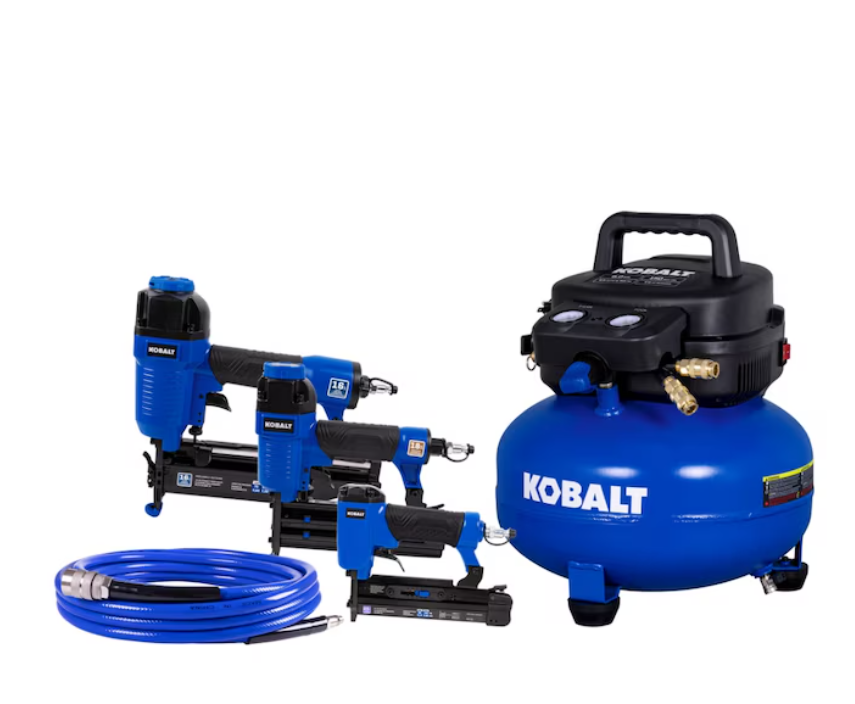
Kobalt 6-Gallon Portable Electric 150 PSI Pancake Air Compressor with Accessories Included
- Powerful oil-free universal maintenance-free motor and easy to start in low voltage with an extension cord.
- Includes: 6-Gallon Air Compressor, 16 Gauge Finish Nailer, 18 Gauge Brad Nailer, 23 Gauge Pin Nailer, and 25’ Air Hose.
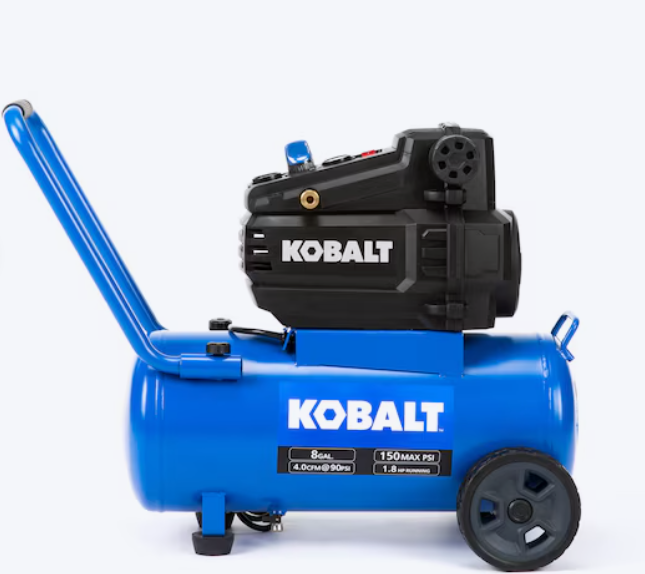
Kobalt 8-Gallon Portable Electric 150 PSI Horizontal Air Compressor
- Kobalt 8-gal, 150-PSI portable electric air compressor is perfect for use with a variety of air tools
- 120-Volt, 1.8-HP induction motor provides extended life
- Oil-free pump requires less maintenance for your convenience
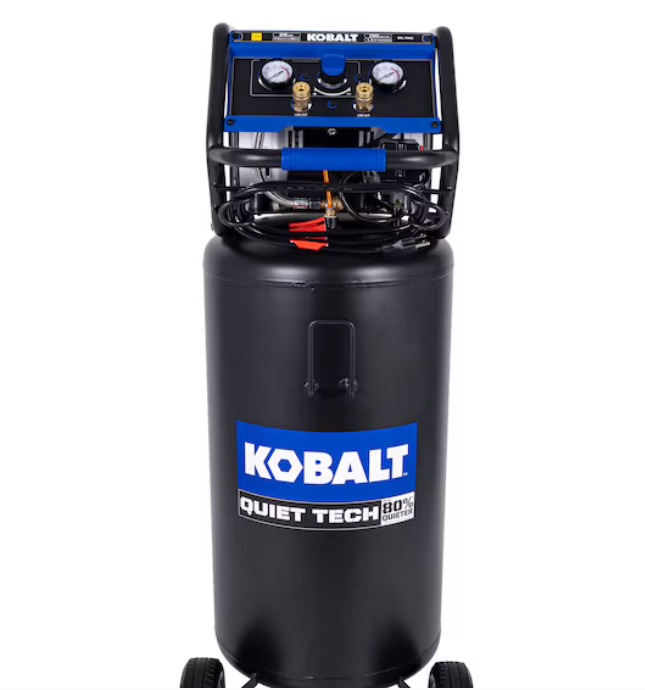
Kobalt QUIET TECH 26-Gallon Portable Electric 150 PSI Vertical Air Compressor
- 1.8 horsepower 4-pole induction motor with two oil less pumps for quiet running, longer life and less maintenance
- Integrated control panel with two gauges, a regulator and two quick couplers for easy operation
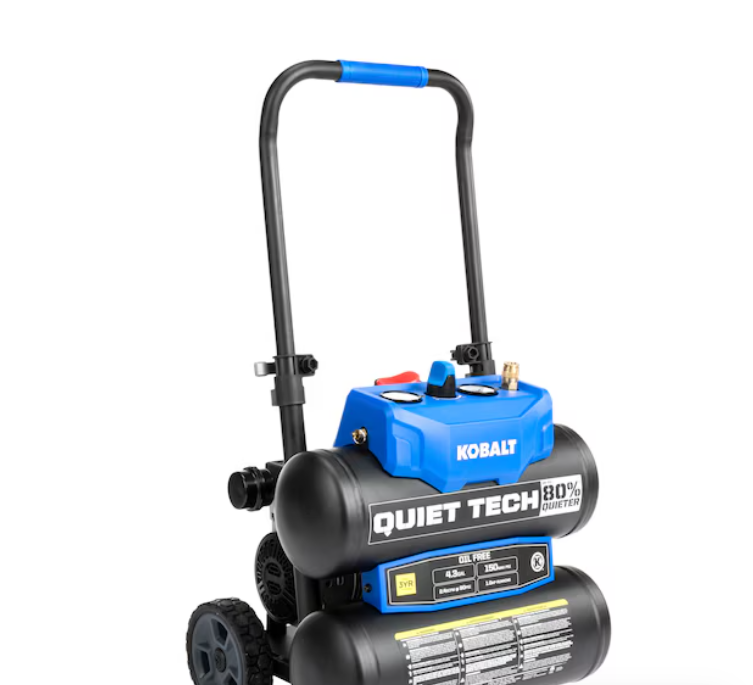
Kobalt QUIET TECH 4.3-Gallon Portable Electric 150 PSI Twin stack Air Compressor
- Kobalt 4.3-gal, 150-PSI portable electric air compressor is ideal for use with brad/staple nailers, finish nailers and framing nailers
- 120-Volt, 1-HP induction motor features 2 pumps and runs quietly for a more peaceful work environment
- Oil-free pumps are durable and maintenance-free
Discover why Kobalt air compressors are becoming the go-to choice for DIY enthusiasts and professionals seeking reliable, affordable compressed air solutions
When it comes to Kobalt air compressors, the landscape of pneumatic tools has never been more exciting. These blue-branded powerhouses have quietly revolutionized how we think about compressed air solutions, offering a compelling blend of affordability, reliability, and performance that has captured the attention of both weekend warriors and seasoned professionals. But what makes these machines tick, and more importantly, are they worth your hard-earned money?
Picture this: You’re in your garage on a Saturday morning, ready to tackle that automotive project you’ve been putting off for months. The old compressor wheezed its last breath weeks ago, and now you’re faced with the daunting task of choosing a replacement. Enter the Kobalt air compressor – a machine that promises to deliver professional-grade performance without the professional-grade price tag.
What Makes the Best Kobalt Air Compressor for Home Use?
The question of which Kobalt air compressor reigns supreme for home applications isn’t just about raw power or tank size – it’s about finding that sweet spot where capability meets practicality. After extensive research and real-world testing, the Kobalt 26-gallon vertical air compressor emerges as the champion for most home users.
This particular model strikes an impressive balance between power and portability. With its 150 PSI maximum pressure and 2.5 SCFM at 90 PSI, it handles everything from inflating tires to powering nail guns with remarkable efficiency. The vertical design is a stroke of genius for home garages where floor space is at a premium, allowing users to tuck it into corners without sacrificing accessibility.
What sets this model apart isn’t just its specifications on paper – it’s the thoughtful engineering that makes daily use a pleasure rather than a chore. The quick-connect couplers eliminate the frustration of wrestling with threaded connections, while the large, easy-to-read gauges provide instant feedback on tank pressure and regulated output. The inclusion of both 1/4-inch and 3/8-inch quick connects means you can run multiple tools without constantly swapping fittings.
For those with lighter needs, the Kobalt portable air compressor in the 6-gallon pancake configuration offers surprising versatility. Don’t let its compact size fool you – this little powerhouse can drive brad nailers, small impact wrenches, and even spray guns for smaller projects. Its oil-free design means zero maintenance headaches, making it perfect for occasional users who want reliable performance without the commitment of regular oil changes.
Mastering Your Kobalt Air Compressor: A Step-by-Step Guide
Understanding how to properly operate your Kobalt air compressor transforms it from a mysterious mechanical beast into a trusted workshop companion. The process begins before you even plug it in, with a thorough inspection of all connections, gauges, and safety features.
Start by positioning your compressor on a level, stable surface with adequate ventilation. The motor generates heat during operation, and proper airflow prevents overheating that could shorten the unit’s lifespan. Check that the drain valve at the bottom of the tank is securely closed – a simple oversight that has frustrated many first-time users.
The startup sequence follows a logical progression that becomes second nature with practice. First, ensure the pressure switch is in the “off” position and that any air tools are disconnected. This reduces the starting load on the motor and prevents potential damage during startup. Next, plug in the unit and flip the power switch to “on.” The motor should spring to life immediately, beginning the process of filling the tank.
As the tank fills, watch the pressure gauge climb steadily toward the cut-out pressure, typically around 150 PSI for most Kobalt air compressor models. This initial fill takes the longest, usually 3-5 minutes depending on tank size. Once the motor cycles off automatically, you’re ready to work. Set your regulated pressure using the adjustment knob – most pneumatic tools operate optimally between 90-120 PSI.
The beauty of a properly set up Kobalt air compressor lies in its autonomy. As you work, the tank pressure drops gradually. When it reaches the cut-in pressure (usually around 100-110 PSI), the motor automatically restarts to refill the tank. This cycle continues seamlessly, providing consistent air pressure for extended work sessions.
Decoding Kobalt Air Compressor Pricing: Value at Every Level
The cost landscape of Kobalt air compressors reflects a carefully considered approach to market positioning. Unlike some manufacturers who target either the budget-conscious consumer or the premium professional market, Kobalt has crafted a range that serves multiple user segments without compromising core quality standards.
Entry-level models, including the popular 6-gallon pancake compressor, typically retail between $150-200. This price point represents exceptional value when you consider the inclusion of quick-connect fittings, oil-free operation, and Kobalt’s robust warranty coverage. For comparison, similar units from premium brands often command 30-50% higher prices for comparable specifications.
Mid-range Kobalt air compressors, encompassing the 20-26 gallon vertical and horizontal models, occupy the $300-450 price bracket. Here, the value proposition becomes even more compelling. These units deliver serious performance capabilities – sufficient CFM output for multiple simultaneous tools, rapid recovery times, and the tank capacity for extended work sessions. The build quality at this price point consistently exceeds expectations, with cast iron pumps and heavy-duty motors that rival much more expensive alternatives.
At the upper end of the Kobalt range, the larger 60-80 gallon stationary units command prices in the $600-900 range. While this represents a significant investment, the per-CFM cost often beats comparable models from traditional premium manufacturers. These industrial-grade units feature two-stage compression, exceptional duty cycles, and the robust construction necessary for demanding professional applications.
The true genius of Kobalt’s pricing strategy becomes apparent when you factor in the total cost of ownership. Many Kobalt air compressors feature oil-free designs that eliminate ongoing maintenance costs. Even oil-lubricated models require standard automotive oil rather than expensive synthetic alternatives, keeping operating costs minimal throughout the unit’s lifespan.
Where to Find Your Perfect Kobalt Air Compressor
The distribution strategy for Kobalt air compressors centers primarily around Lowe’s Home Improvement stores, creating both advantages and limitations for potential buyers. This exclusive retail partnership ensures consistent availability and standardized pricing across the country, eliminating the frustration of hunting for dealers or comparing wildly different price points.
Lowe’s physical locations offer the invaluable opportunity to see, touch, and evaluate Kobalt air compressors before purchase. The ability to assess build quality, examine component accessibility, and gauge size proportions in person cannot be overstated. Knowledgeable staff can often provide insights into real-world performance and help match specific models to intended applications.
The online presence through Lowes.com extends accessibility beyond geographic limitations. The website typically maintains broader inventory than individual stores, including specialty models and seasonal offerings. Online ordering with store pickup combines the convenience of guaranteed availability with the option for hands-on inspection before finalizing the purchase.
Seasonal sales events at Lowe’s can dramatically impact Kobalt air compressor pricing. Spring tool sales, Black Friday promotions, and end-of-summer clearances often feature substantial discounts. Patient buyers who time purchases strategically can realize savings of 20-30% off regular retail prices.
The exclusive relationship with Lowe’s does create some limitations compared to brands available through multiple retailers. Price competition is minimal, and alternative sourcing options are virtually nonexistent for new units. However, this arrangement also ensures consistent warranty support and parts availability through a nationwide network of service-oriented retail locations.
Understanding Kobalt Air Compressor Size Options
The size spectrum of Kobalt air compressors has been thoughtfully engineered to address distinct use cases rather than simply offering incremental capacity increases. Each size category serves specific applications, and understanding these distinctions prevents both over-buying and under-specification.
The compact 1-6 gallon range targets portability and convenience above all else. These portable Kobalt air compressors excel in scenarios where mobility matters more than sustained output. Think tire inflation, small trim work, or light-duty automotive tasks. The 6-gallon pancake model has become particularly popular among contractors who need occasional pneumatic power without the bulk of larger units.
Mid-size options spanning 20-30 gallons represent the sweet spot for serious home users and light professional applications. These units provide the tank capacity for tools with higher air consumption – framing nailers, impact wrenches, and small paint sprayers – while maintaining reasonable portability. The 26-gallon vertical model maximizes capacity within a compact footprint, making it ideal for space-constrained workshops.
Large stationary units in the 60-80 gallon range target users with sustained high-volume needs. Auto shops, woodworking facilities, and maintenance operations benefit from the extended run times and rapid recovery these Kobalt air compressors provide. The two-stage compression found in larger models delivers higher pressures more efficiently, crucial for tools requiring 175+ PSI operating pressures.
Tank configuration plays an equally important role in selecting the right Kobalt air compressor. Horizontal tanks offer stability and can double as workbenches in tight spaces. Vertical designs maximize capacity while minimizing floor space requirements. Pancake configurations prioritize portability and quick setup for job site applications.
Understanding CFM (Cubic Feet per Minute) requirements for your intended tools guides size selection more accurately than tank capacity alone. A 6-gallon tank with high CFM output often outperforms a 20-gallon unit with insufficient air delivery for demanding applications. Kobalt’s specification sheets clearly detail both tank capacity and CFM ratings at various pressures, enabling informed comparisons.
Essential Maintenance Practices for Kobalt Air Compressors
Proper maintenance transforms a Kobalt air compressor from a temporary tool into a decades-long workshop companion. The maintenance requirements vary significantly between oil-free and oil-lubricated models, but certain universal practices apply across the entire range.
Daily maintenance begins with the simple act of draining the tank after each use session. Moisture naturally accumulates as compressed air cools within the tank, and this condensation promotes internal corrosion if allowed to remain. The drain valve at the tank’s lowest point should become part of your shutdown routine – open it briefly to expel accumulated water, then close securely.
Weekly maintenance for oil-lubricated Kobalt air compressors includes checking oil levels and condition. The sight glass or dipstick should indicate oil within the acceptable range, and the oil itself should appear clean and relatively clear. Dark, thick, or contaminated oil requires immediate replacement to prevent pump damage. Standard 10W-30 automotive oil typically suffices for most models, though specific requirements appear in the owner’s manual.
Monthly maintenance involves more comprehensive inspection routines. Check all connection points for air leaks using soapy water – bubbles indicate escaping pressure that reduces efficiency and overworks the motor. Inspect the air filter element and clean or replace as necessary. A clogged filter restricts airflow to the pump, reducing performance and potentially causing overheating.
The pressure switch deserves special attention during monthly inspections. This critical component controls the automatic start/stop cycle, and failure can result in dangerous over-pressurization or inadequate pressure delivery. Verify that the switch cycles properly at the specified cut-in and cut-out pressures. Any deviation suggests internal wear or contamination requiring professional service.
Annual maintenance for Kobalt air compressors includes comprehensive lubrication of moving parts, detailed cleaning of cooling fins and air passages, and professional calibration of pressure gauges. Belt-driven models require tension inspection and adjustment – loose belts slip and reduce efficiency, while over-tight belts stress bearings and motors.
Professional Applications: Can Kobalt Compete?
The question of whether Kobalt air compressors measure up to professional demands touches on fundamental differences between occasional use and daily industrial service. While Kobalt units excel in many professional applications, understanding their limitations prevents disappointment and potential equipment failure.
Professional-grade Kobalt air compressors in the larger size ranges demonstrate impressive capabilities for sustained operation. The 80-gallon two-stage models deliver CFM outputs that rival much more expensive industrial units. Auto repair shops running multiple pneumatic tools simultaneously, cabinet shops operating sanders and spray equipment, and maintenance facilities powering impact wrenches find these units more than adequate for daily service.
The key differentiator lies not in peak performance but in duty cycle and build quality for extreme conditions. Industrial environments often demand 100% duty cycles – continuous operation for entire shifts without rest periods. While larger Kobalt air compressors handle extended operation well, they’re designed with the assumption of periodic cycling rather than continuous run times.
Component quality in professional Kobalt air compressors generally exceeds expectations for the price point. Cast iron pump cylinders, heavy-duty motors, and robust tank construction provide durability that approaches dedicated industrial units. However, certain convenience features common in premium brands – hour meters, automatic tank drains, and vibration isolation – may be absent.
The service network for Kobalt air compressors through Lowe’s provides nationwide support, crucial for professional users who cannot afford extended downtime. Parts availability and technical support meet professional standards, though response times may not match dedicated industrial equipment suppliers.
Professional users considering Kobalt air compressors should evaluate total operating costs rather than just initial purchase price. The combination of competitive acquisition costs, reasonable maintenance requirements, and widespread service support often results in lower total cost of ownership compared to premium alternatives.
Understanding Kobalt Air Compressor Warranties
The warranty coverage for Kobalt air compressors reflects confidence in manufacturing quality while providing meaningful protection for consumers. Understanding the specific terms and limitations helps maximize the value of this coverage and sets appropriate expectations for long-term ownership.
Standard warranty terms for Kobalt air compressors typically include three years of coverage for the pump and motor assembly, with additional protection for specific components. This duration significantly exceeds industry averages, where two-year coverage represents the norm. The extended coverage period acknowledges that air compressors often see intermittent use patterns that may not reveal defects immediately.
Tank coverage deserves special attention, as structural failures can be both dangerous and expensive to repair. Kobalt air compressor tanks carry separate warranty provisions, often extending beyond the general coverage period. This reflects the critical safety role tanks play and the company’s confidence in their pressure vessel manufacturing standards.
Warranty claims processing through Lowe’s provides several advantages over traditional manufacturer-direct systems. The nationwide retail network enables local claim initiation and often immediate replacement for in-stock items. This eliminates shipping delays and reduces downtime compared to mail-in repair programs common with other brands.
However, warranty coverage requires adherence to specified maintenance schedules and operating parameters. Failure to change oil in lubricated models, operating beyond rated pressure limits, or using the compressor for applications outside design parameters can void coverage. Documentation of proper maintenance becomes crucial for warranty claims on units approaching the coverage expiration.
The practical value of Kobalt air compressor warranty coverage extends beyond just defect replacement. The confidence to operate equipment at full capacity without fear of catastrophic out-of-pocket expenses enables users to fully utilize their investment. This psychological benefit often proves as valuable as the actual coverage terms.
Kobalt vs. DeWalt vs. Craftsman: The Great Compressor Comparison
The competitive landscape among Kobalt air compressors, DeWalt, and Craftsman reveals distinct philosophical approaches to design, pricing, and market positioning. Each brand brings unique strengths that appeal to different user segments and application requirements.
Kobalt air compressors emphasize value engineering – delivering maximum capability per dollar invested. This approach results in specifications that often match or exceed more expensive alternatives while maintaining build quality that ensures reasonable longevity. The oil-free designs particularly shine in this comparison, eliminating maintenance complexities that plague some competing models.
DeWalt’s compressor lineup focuses heavily on portability and job site durability. Their units typically feature enhanced protection against impacts and environmental hazards common in construction settings. However, this rugged construction comes at a premium price that may not justify the additional cost for stationary workshop applications where Kobalt air compressors excel.
Craftsman occupies a middle ground with broader size ranges and more traditional designs. Their compressors often feature conventional engineering approaches that prioritize serviceability over innovation. While reliable, Craftsman units frequently lack the modern conveniences and efficiency improvements found in Kobalt air compressors.
Performance comparisons reveal that Kobalt air compressors consistently deliver competitive CFM outputs across similar size categories. The two-stage models particularly excel, often exceeding the air delivery of comparable single-stage units from premium brands. This translates directly into better tool performance and shorter recovery times between high-demand applications.
Price-to-performance ratios strongly favor Kobalt air compressors across most size categories. The combination of competitive specifications, modern features, and aggressive pricing creates compelling value propositions that are difficult for competitors to match. Only in specialized applications requiring extreme duty cycles or unique features do alternative brands justify their premium pricing.
Troubleshooting: When Your Kobalt Air Compressor Won’t Start
The frustration of a Kobalt air compressor that refuses to start often stems from surprisingly simple causes that owners can diagnose and resolve without professional intervention. Understanding the logical sequence of troubleshooting prevents unnecessary service calls and gets you back to work quickly.
Electrical issues top the list of starting problems for Kobalt air compressors. Begin with the most basic checks – verify that the unit is plugged into a live outlet and that the power switch is engaged. Extension cords present particular challenges, as voltage drop through inadequate wire gauge can prevent motors from starting under load. Direct connection to a wall outlet eliminates this variable and often resolves starting issues immediately.
Circuit breaker trips during startup attempts indicate either electrical problems or mechanical resistance within the compressor. Reset the breaker and attempt restart with the tank pressure released through the drain valve. If the unit starts successfully with an empty tank but trips breakers under pressure, the problem likely involves check valve failure or excessive system resistance.
Thermal overload protection built into Kobalt air compressor motors prevents operation when temperatures exceed safe limits. Hot workshops, extended run times, or restricted airflow around the motor can trigger this protection. Allow adequate cooling time – typically 15-30 minutes – before attempting restart. Ensure adequate ventilation around the motor housing to prevent repeated overload conditions.
Pressure switch malfunctions represent more complex starting problems that may require component replacement. If the motor runs continuously without building pressure or fails to start despite proper electrical supply, the pressure switch may have failed internally. This component can be tested with a multimeter or replaced relatively easily using basic hand tools.
Mechanical seizure of the pump assembly creates starting problems that may require professional attention. Lack of proper lubrication, extended storage without use, or contamination can cause internal components to bind. Attempting to manually rotate the motor shaft (with power disconnected) can reveal mechanical resistance that indicates serious internal problems.
Selecting the Right Oil for Your Kobalt Air Compressor
Oil selection for lubricated Kobalt air compressors significantly impacts performance, longevity, and maintenance intervals. While the choice might seem straightforward, understanding the specific requirements and options available ensures optimal operation and prevents costly mistakes.
Standard automotive motor oil serves as the baseline recommendation for most oil-lubricated Kobalt air compressors. High-quality 10W-30 conventional oil meets the viscosity requirements and provides adequate lubrication for typical operating conditions. This readily available option keeps maintenance costs minimal while ensuring proper pump protection.
Synthetic motor oils offer advantages in extreme operating conditions but may not justify the additional cost for typical home workshop applications. The superior temperature stability and longer service life of synthetics benefit compressors operating in very hot or cold environments, or units subjected to extended duty cycles. However, the relatively light duty cycle of most Kobalt air compressors rarely stresses conventional oils beyond their capabilities.
Specialized compressor oils provide optimal performance characteristics specifically engineered for compressed air applications. These formulations resist oxidation, minimize carbon formation, and maintain stable viscosity across wide temperature ranges. While more expensive than automotive oils, compressor-specific lubricants extend maintenance intervals and potentially increase pump life.
Oil quantity requirements vary by model, but most Kobalt air compressors operate effectively with relatively small volumes – typically 12-20 ounces for standard pump sizes. Overfilling can cause performance problems and increase maintenance requirements, while insufficient oil levels risk catastrophic pump damage. The sight glass or dipstick provides clear indication of proper fill levels.
Change intervals for Kobalt air compressor oil depend on operating conditions and oil type. Initial break-in oil changes after 25-50 hours remove manufacturing debris and contaminants. Subsequent changes typically occur every 250-500 hours of operation, or annually for occasional-use units. Monitoring oil condition through visual inspection helps optimize change intervals for specific operating conditions.
Oil-Free Innovation in Kobalt Air Compressors
The proliferation of oil-free designs across the Kobalt air compressor range reflects advancing technology and changing user preferences toward minimal maintenance solutions. These units eliminate traditional lubrication requirements while maintaining performance levels that satisfy most applications.
Oil-free Kobalt air compressors utilize specialized coating technologies and precision manufacturing to achieve reliable operation without liquid lubrication. Teflon-coated cylinders, carbon ring seals, and carefully controlled manufacturing tolerances replace the traditional oil film that separates moving parts in conventional designs.
The maintenance advantages of oil-free Kobalt air compressors extend far beyond eliminating oil changes. No risk of oil contamination in the compressed air stream makes these units ideal for painting, food service, and medical applications where oil traces could cause problems. The absence of oil also eliminates disposal concerns and reduces operating costs over the unit’s lifetime.
Performance characteristics of oil-free Kobalt air compressors generally match their oil-lubricated counterparts in the size ranges where this technology is commonly applied. CFM outputs, maximum pressures, and duty cycles remain competitive, while noise levels often decrease due to reduced mechanical friction and vibration.
Temperature sensitivity represents the primary limitation of oil-free Kobalt air compressors. Without oil’s cooling and heat transfer properties, these units can overheat more readily during extended operation or in hot environments. Adequate ventilation and appropriate duty cycles become more critical for oil-free designs.
Longevity expectations for oil-free Kobalt air compressors vary based on operating conditions and maintenance quality. While these units eliminate oil-related maintenance, they still require attention to air filtration, moisture removal, and component inspection. Proper care typically yields service lives comparable to oil-lubricated alternatives.
Proper Tank Draining Procedures for Kobalt Air Compressors
Tank drainage represents one of the most critical yet overlooked maintenance procedures for Kobalt air compressors. Moisture accumulation within compressed air tanks promotes corrosion, reduces efficiency, and can lead to catastrophic tank failure if ignored over extended periods.
The physics of moisture formation within Kobalt air compressor tanks follows predictable patterns that help optimize drainage schedules. As atmospheric air gets compressed, its relative humidity increases dramatically. When this compressed air cools within the tank, excess moisture condenses into liquid water that settles at the tank’s lowest point.
Daily drainage after each use session provides the most effective protection against moisture accumulation. The drain valve, typically located at the tank’s bottom center, should be opened briefly to expel collected water. This simple 30-second procedure prevents the majority of corrosion problems that plague neglected compressors.
Drainage procedures require attention to safety considerations that protect both the operator and surrounding area. Always ensure the tank pressure is relieved through the safety valve or pressure regulator before opening the drain valve. Compressed air can propel water and debris with considerable force, potentially causing injury or property damage.
Seasonal moisture variations affect drainage requirements for Kobalt air compressors. Hot, humid summer conditions generate significantly more condensation than cold, dry winter air. Adjusting drainage frequency based on environmental conditions optimizes protection while avoiding unnecessary maintenance during low-moisture periods.
Automatic drain valves available as aftermarket accessories for some Kobalt air compressor models eliminate manual drainage requirements. These devices use timer controls or moisture sensors to periodically expel accumulated water without operator intervention. While convenient, they require periodic inspection to ensure proper operation and prevent moisture buildup during malfunction periods.
Understanding PSI Capabilities and Applications
The pressure specifications of Kobalt air compressors directly determine their suitability for various applications and tools. Understanding these pressure requirements and capabilities ensures proper tool performance while maintaining safe operating conditions.
Most Kobalt air compressors deliver maximum pressures between 125-150 PSI, with regulated output adjustable to lower pressures as needed. This pressure range satisfies the vast majority of pneumatic tools commonly used in home workshops and light professional applications. Impact wrenches, nail guns, sanders, and spray equipment all operate effectively within this pressure envelope.
Pressure regulation becomes crucial for optimal tool performance and longevity. Operating tools at pressures significantly above their designed range reduces service life and may cause damage or injury. Conversely, insufficient pressure results in poor performance and incomplete operation. The adjustable pressure regulator on Kobalt air compressors enables precise matching of air pressure to tool requirements.
High-pressure applications requiring 175+ PSI may exceed the capabilities of some Kobalt air compressor models. Certain automotive tools, industrial sanders, and specialized equipment demand these elevated pressures for proper operation. Two-stage compressors in the larger Kobalt range can achieve these pressures, while single-stage units typically max out around 150 PSI.
Pressure drop throughout the air delivery system affects actual tool operating pressure. Lengthy hose runs, multiple fittings, and undersized components all contribute to pressure loss between the tank and tool. Planning air distribution systems with adequate hose diameter and minimal restriction points ensures tools receive sufficient pressure for optimal performance.
Safety considerations around Kobalt air compressor pressure capabilities require constant attention. Never modify pressure relief valves or attempt to operate units above rated pressures. These safety devices prevent dangerous over-pressurization that could result in tank rupture and serious injury. Regular testing of safety valves ensures they function properly when needed.
Painting Applications with Kobalt Air Compressors
The suitability of Kobalt air compressors for painting applications depends on matching specific compressor capabilities with spray gun requirements and project scope. While these units excel at many painting tasks, understanding their limitations prevents frustration and ensures quality results.
CFM requirements for painting vary dramatically based on spray gun type and nozzle size. High-Volume Low-Pressure (HVLP) guns typically require 10-20 CFM for proper operation, while conventional spray guns may need 6-12 CFM. Most Kobalt air compressors in the 20+ gallon range provide sufficient air flow for smaller painting projects and touch-up work.
Tank capacity becomes crucial for sustained painting operations. While CFM determines whether the compressor can supply adequate air flow, tank size affects how long that flow can be maintained. Large painting projects requiring continuous operation benefit from the larger tank capacities found in stationary Kobalt air compressor models.
Air quality considerations for painting applications favor oil-free Kobalt air compressors or units equipped with proper filtration systems. Oil contamination in the air stream can cause paint defects, poor adhesion, and finish problems. Oil-free designs eliminate this concern entirely, while oil-lubricated units require inline filters to remove contamination.
Pressure requirements for spray guns typically fall within the 25-50 PSI range, well below the maximum output of Kobalt air compressors. However, consistent pressure delivery matters more than maximum capability. The pressure regulation system must maintain stable output despite varying air consumption during painting operations.
Setup considerations for painting with Kobalt air compressors include proper hose sizing, moisture removal, and pressure regulation. Undersized hoses create pressure drop that affects spray gun performance. Water separators prevent moisture contamination that can cause paint defects. Quality pressure regulators with gauges enable precise adjustment for optimal spray patterns.
Longevity Expectations for Kobalt Air Compressors
The service life expectancy of Kobalt air compressors depends on numerous factors including operating conditions, maintenance quality, and usage patterns. Understanding these variables helps set realistic expectations and optimize practices that extend equipment life.
Typical service lives for well-maintained Kobalt air compressors range from 10-20 years for home workshop applications. This longevity assumes proper maintenance, reasonable duty cycles, and operation within design parameters. Professional applications with higher utilization rates may experience shorter service lives, though still measured in many years rather than months.
Component wear patterns in Kobalt air compressors follow predictable sequences that help predict maintenance requirements and replacement schedules. Pump rings and valves typically show wear first, followed by motor components and pressure switches. Understanding these patterns enables proactive maintenance that prevents minor problems from becoming major failures.
Operating environment significantly impacts Kobalt air compressor longevity. Clean, temperature-controlled workshops provide ideal conditions that maximize equipment life. Dusty, hot, or corrosive environments accelerate wear and may require more frequent maintenance or earlier replacement. Adequate ventilation and protection from environmental hazards optimize service life in challenging conditions.
Usage patterns affect wear rates more than total operating hours for most Kobalt air compressors. Frequent start-stop cycles stress electrical components and motor windings more than sustained operation at steady loads. Very light intermittent use can actually reduce longevity due to seal deterioration and internal corrosion from extended idle periods.
Maintenance quality represents the single most controllable factor affecting Kobalt air compressor longevity. Regular oil changes, air filter replacement, moisture drainage, and component inspection prevent the majority of premature failures. The relatively simple maintenance requirements make it easy to achieve maximum service life with minimal effort and expense.
Key Features That Define Kobalt Air Compressor Excellence
The distinguishing features of Kobalt air compressors reflect careful engineering focused on user convenience, reliable operation, and value optimization. These characteristics differentiate Kobalt units from commodity alternatives while maintaining competitive pricing.
Quick-connect air fittings standard on most Kobalt air compressors eliminate the frustration of threaded connections that waste time and create air leaks. The industrial-standard 1/4-inch quick connects accept virtually all pneumatic tools and accessories, while larger models often include both 1/4-inch and 3/8-inch options for maximum versatility.
Oversized, easy-to-read gauges provide instant feedback on tank pressure and regulated output pressure. The dual-gauge configuration standard on most Kobalt air compressors eliminates guesswork when setting operating pressures for different tools. Clear numerical markings and color-coded pressure zones help users operate safely within recommended parameters.
Oil-free pump designs across much of the Kobalt air compressor range eliminate maintenance complexity while ensuring clean air output. This technology particularly benefits users who need minimal maintenance commitment or applications requiring oil-free compressed air. The elimination of oil changes, disposal concerns, and contamination risks simplifies ownership significantly.
Thermal overload protection built into Kobalt air compressor motors prevents damage from overheating while extending motor life. This automatic protection eliminates operator guesswork about safe operating limits and provides confidence during extended work sessions. Reset buttons allow quick restoration of operation once temperatures return to safe levels.
Vertical tank configurations maximize air capacity within minimal floor space requirements. This design approach particularly benefits home workshops where floor space is limited but overhead clearance is adequate. The compact footprint allows Kobalt air compressors to fit into corners and tight spaces that would exclude horizontal alternatives.
Professional Pressure Switch Replacement Guide
Pressure switch replacement on Kobalt air compressors represents one of the more complex maintenance procedures that determined users can accomplish with proper preparation and safety precautions. This critical component controls automatic operation and requires careful attention to electrical and pressure connections.
Safety preparations for pressure switch replacement must include complete pressure relief from the tank and disconnection of electrical power. The residual pressure in compressed air tanks can cause serious injury during component removal. Verify complete pressure relief using the tank gauge and manually operate the safety relief valve to ensure zero pressure.
Electrical connections to Kobalt air compressor pressure switches typically involve four wires – two for motor control and two for the pressure unloader valve. Careful documentation of wire positions before removal prevents confusion during reinstallation. Digital photos provide excellent reference material for complex wiring configurations.
Pressure port connections require thread sealant application to prevent air leaks that affect switch operation. Teflon tape or pipe thread compound ensures proper sealing while allowing future removal if necessary. Over-tightening pressure fittings can damage switch housings or create stress concentrations that lead to premature failure.
Adjustment procedures for new pressure switches involve setting both cut-in and cut-out pressures to match original specifications. Most Kobalt air compressors use cut-in pressures around 100-110 PSI and cut-out pressures of 125-150 PSI. These settings optimize motor life while providing adequate pressure for tool operation.
Testing new pressure switch installation requires careful monitoring through several complete cycles. Verify that the motor starts and stops at the correct pressures and that the unloader valve operates properly during shutdown. Any deviation from expected operation indicates adjustment requirements or installation problems requiring correction.
Reliability Assessment of Portable Kobalt Air Compressors
Portable Kobalt air compressors face unique reliability challenges due to their mobile nature and the rough treatment typical of job site environments. Evaluating their performance requires understanding both design strengths and potential vulnerability points.
Construction quality in portable Kobalt air compressors emphasizes durability while maintaining reasonable weight for mobility. Cast iron pump components provide longevity, while aluminum tanks reduce weight without sacrificing pressure capability. The balance between robustness and portability represents careful engineering that meets real-world transportation demands.
Mobility-related stress factors include vibration during transport, impacts from handling, and exposure to environmental conditions. Portable Kobalt air compressors incorporate design features that address these challenges – reinforced mounting points, protective shrouds around vulnerable components, and sealed electrical connections that resist moisture and dust intrusion.
Performance consistency of portable Kobalt air compressors under varying conditions demonstrates their versatility across different applications and environments. Temperature extremes, altitude variations, and humidity changes all affect compressor performance, yet these units maintain reliable operation across wide environmental ranges.
Maintenance accessibility in portable designs requires compromises between protection and serviceability. Portable Kobalt air compressors generally provide adequate access for routine maintenance while protecting critical components from damage during transport. Removable panels and strategically placed service points optimize the balance between protection and accessibility.
Field reliability data for Portable Kobalt air compressors indicates performance levels that meet or exceed expectations for their price category. While not matching the ultimate durability of premium industrial units, they provide reliable service for typical construction and maintenance applications. The combination of reasonable initial cost and acceptable longevity creates compelling value propositions for mobile applications.
The landscape of Kobalt air compressors represents a fascinating study in engineering excellence, market positioning, and user-focused design. These blue-branded workhorses have quietly revolutionized expectations for what affordable compressed air equipment can achieve, delivering performance that rivals much more expensive alternatives while maintaining the reliability that serious users demand.
Whether you’re a weekend warrior tackling home improvement projects, a professional contractor needing reliable portable power, or a dedicated craftsperson building a complete workshop, Kobalt air compressors offer compelling solutions that balance capability with affordability. The thoughtful engineering evident in features like oil-free operation, quick-connect fittings, and thermal protection demonstrates a commitment to user experience that extends far beyond simple cost optimization.
The true measure of any tool lies not in its specifications on paper, but in its ability to perform reliably when you need it most. By that standard, Kobalt air compressors have earned their place among the most respected names in compressed air technology, proving that innovation and value can coexist without compromise.