
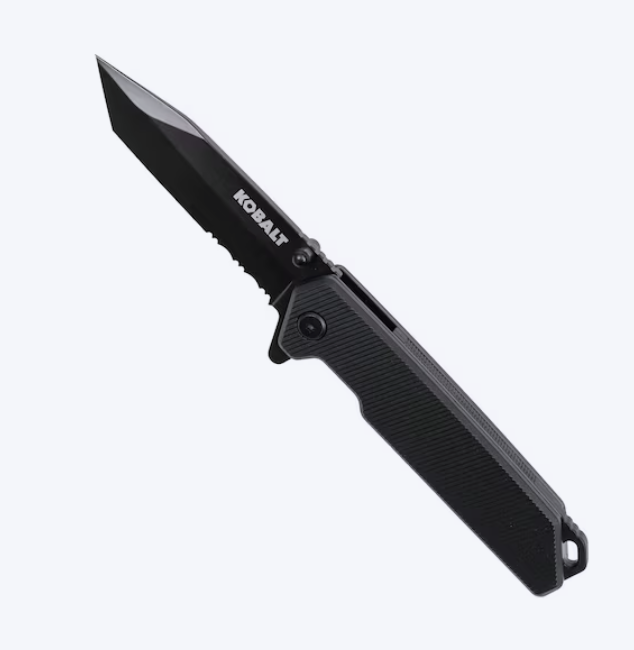
Kobalt 3.5-in Stainless steel Flip-out Pocket Knife
- Stainless steel blade offers excellent edge retention and resistance to corrosion and wear
- Folding pocket knife with potable and convenience belt clip design
- Powerful Liner lock utilizes a thick lock bar to secure your pocket knife blade
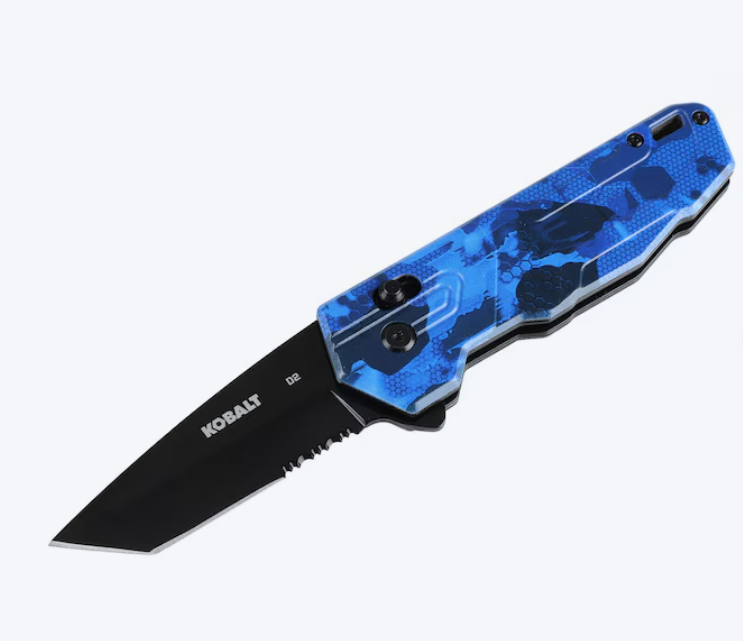
Kobalt 3-in Steel Tanto Pocket Knife
- D2 Tool Steel Stays Durable and Sharp
- Partially Serrated Tanto Style Blade
- Flipper 1-Handed Opening
- Deep Pocket Belt Clip for Discreet Carry
- Lanyard Hole for Tethering Needs
- Camouflage Style Stainless Steel Handle
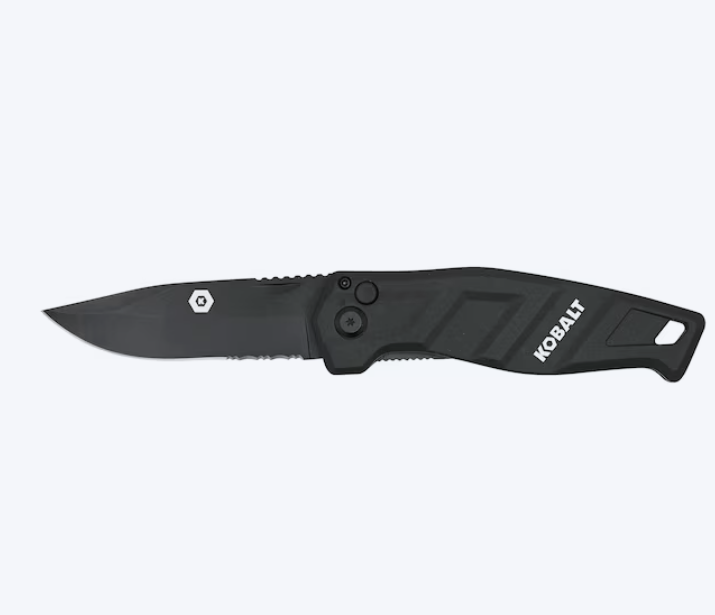
Kobalt 3.5-in High carbon stainless steel Straight Pocket Knife
- Features a press and flip mechanism providing users easy, one-handed opening
- Stainless steel drop point partially serrated blade that stays sharp
- The liner lock that secures the blade while also allowing users to easily close it when done
- Glass-filled nylon handle offer a solid grip
Discover why these powerhouse tools are revolutionizing workspaces and workshops across America
When you think of professional-grade cutting tools, what comes to mind? For countless tradespeople, DIY enthusiasts, and crafting aficionados, the Kobalt Knife has emerged as a game-changing solution that bridges the gap between affordability and performance. Whether you’re a seasoned contractor tackling demanding jobsites or a weekend warrior pursuing your latest home improvement project, understanding the ins and outs of Kobalt’s cutting tool lineup could be the difference between mediocre results and masterful execution.
Picture this: you’re halfway through installing new flooring when your cheap utility knife decides to give up the ghost. The blade dulls, the handle cracks, and suddenly your smooth weekend project turns into a frustrating ordeal. This scenario plays out in workshops and construction sites everywhere, which is exactly why discerning professionals have turned their attention to Kobalt Knife products that promise reliability when it matters most.
The Kobalt Knife Universe: A Comprehensive Overview of Available Types
Walking into any Lowe’s store or browsing their online catalog, you’ll discover that the Kobalt Knife family extends far beyond a single product. The brand has strategically developed a comprehensive lineup designed to address virtually every cutting scenario imaginable.
The flagship utility knife represents the cornerstone of their offering, featuring a robust construction that can handle everything from cardboard breakdown to precision material cutting. These workhorses typically feature quick-change blade mechanisms, allowing users to swap out dulled blades in seconds without fumbling with tiny screws or complicated release mechanisms.
For those requiring more specialized functionality, Kobalt offers retractable utility knives that prioritize safety without compromising cutting power. The retractable mechanism ensures the blade stays protected during transport while providing instant access when work demands it. These models often incorporate multiple blade position settings, allowing users to adjust cutting depth based on material thickness and application requirements.
The folding knife category within the Kobalt Knife ecosystem caters to professionals who need compact portability without sacrificing durability. These pocket-friendly options typically feature locking mechanisms that secure the blade during use while maintaining easy one-handed operation for efficiency in fast-paced work environments.
Breaking knives represent another crucial category, specifically engineered for scoring and snapping applications. These specialized tools excel when working with materials like drywall, vinyl flooring, or ceramic tiles where clean, controlled breaks are essential for professional results.
Multi-tool configurations expand the versatility equation by incorporating additional functionality beyond basic cutting. These Swiss Army knife-style solutions often include screwdrivers, wire strippers, and other common tools that eliminate the need to carry multiple implements.
Sourcing Your Kobalt Knife: Where Quality Meets Accessibility
The primary avenue for Kobalt Knife acquisition centers around Lowe’s Home Improvement stores, as Kobalt serves as one of their exclusive house brands. This relationship ensures widespread availability across the United States, with hundreds of physical locations stocking various knife configurations alongside comprehensive replacement blade inventories.
Online purchasing through Lowe’s website provides additional convenience, particularly for bulk orders or when seeking specific model configurations that might not be readily available in local stores. The digital marketplace often features exclusive online deals and bundle packages that can deliver significant value for users planning to invest in multiple tools or accessories.
Third-party retailers occasionally carry Kobalt products, though availability can be inconsistent and pricing may vary significantly from official channels. Some industrial supply companies stock Kobalt knives as part of broader tool assortments, particularly when catering to commercial accounts that require volume purchasing capabilities.
Professional tool distributors sometimes include Kobalt Knife products in their catalogs, especially those serving construction, electrical, or plumbing contractors who appreciate the balance of performance and value that characterizes the brand. These specialized channels often provide additional services like custom engraving, bulk pricing, or integrated billing systems that appeal to business customers.
Investment Analysis: Understanding Kobalt Knife Pricing Dynamics
Pricing for Kobalt Knife products reflects the brand’s positioning as a premium value option rather than a budget basement alternative. Entry-level utility knives typically start in the $8-12 range, making them accessible to casual users while maintaining build quality that exceeds many competitors in similar price brackets.
Mid-range offerings, which include retractable models with enhanced safety features and ergonomic improvements, generally fall within the $15-25 price range. These tools often justify their higher cost through superior blade retention mechanisms, comfortable grip materials, and additional safety features that reduce workplace injury risks.
Premium Kobalt Knife configurations, particularly those incorporating multiple tools or specialized cutting capabilities, can reach $30-40 price points. However, these multi-functional solutions often replace several individual tools, making the investment more attractive when calculated on a per-tool basis.
Bulk purchasing opportunities through Lowe’s Pro accounts can yield significant discounts, particularly for contractors or facilities managers who need to outfit entire teams. Volume pricing typically kicks in around the 10-unit threshold and can reduce per-unit costs by 15-20% depending on specific model selections and seasonal promotions.
Seasonal sales events, particularly during spring home improvement seasons or back-to-school periods, often feature Kobalt Knife products at reduced prices. Black Friday and similar major retail events frequently include tool promotions that can make premium configurations more accessible to budget-conscious buyers.
Replacement Blade Ecosystem: Ensuring Continuous Productivity
One of the most compelling aspects of investing in a Kobalt Knife system lies in the comprehensive replacement blade support that accompanies these tools. Unlike some competitors who create proprietary blade formats that limit replacement options, Kobalt generally adheres to industry-standard blade configurations that ensure long-term availability and competitive pricing.
Standard utility knife blades compatible with most Kobalt models are readily available in multi-packs ranging from 10-blade basic packages to 100-blade contractor bulk options. These high-carbon steel blades typically feature precision grinding that maintains sharpness longer than generic alternatives while remaining cost-effective for high-volume users.
Specialty blade options extend the versatility of Kobalt Knife platforms by offering configurations optimized for specific materials or applications. Hook blades excel for carpet and vinyl cutting, while serrated options tackle fibrous materials that would dull standard blades prematurely. Scoring blades provide controlled cutting depth for applications requiring precise material separation without complete penetration.
The blade packaging often includes protective storage solutions that prevent premature dulling while ensuring safe handling during blade changes. Individual blade sleeves or magnetic dispensers help maintain organization in busy workshops where efficiency and safety must coexist.
Quality control standards for Kobalt replacement blades emphasize consistent performance across entire production runs. Each blade undergoes precision manufacturing processes that ensure uniform cutting angles and edge retention characteristics, reducing the variability that can plague lower-quality alternatives.
Design Philosophy: Fixed vs. Folding Configurations
The Kobalt Knife lineup strategically incorporates both fixed and folding designs to address different user preferences and application requirements. Understanding these design philosophies helps users select optimal configurations for their specific needs.
Fixed-blade utility knives prioritize maximum strength and blade stability for demanding cutting applications. The rigid connection between handle and blade eliminates any potential flex or movement that could compromise cutting precision or safety. These designs excel in high-stress environments where tool failure could create dangerous situations or costly delays.
The solid construction of fixed Kobalt Knife models typically incorporates full-tang designs where the blade metal extends completely through the handle assembly. This construction method distributes cutting forces across the entire tool length, reducing stress concentrations that could lead to premature failure under heavy use.
Folding configurations prioritize portability and blade protection while maintaining functional cutting capability. The pivoting mechanism allows the blade to nest safely within the handle during transport, eliminating the need for separate sheaths or blade guards that can be lost or forgotten.
Modern Kobalt Knife folding designs incorporate sophisticated locking mechanisms that secure the blade firmly in the open position during use. These locks must withstand significant forces while remaining easy enough to operate that users won’t avoid engaging them due to complexity or awkwardness.
The choice between fixed and folding often depends on primary use patterns. Users who keep their knife in a dedicated workspace might prefer fixed designs for maximum performance, while those who carry tools between multiple locations often favor folding configurations for convenience and safety.
Material Science: The Foundation of Kobalt Knife Performance
Understanding the materials that comprise a Kobalt Knife reveals why these tools consistently deliver professional-grade performance across diverse applications. The material selection process balances multiple factors including strength, corrosion resistance, manufacturing cost, and end-user ergonomics.
Handle construction typically employs high-impact polymer composites that provide excellent grip characteristics while resisting common workplace chemicals and environmental conditions. These materials offer superior durability compared to traditional wood or basic plastic handles, maintaining their structural integrity even after years of heavy use.
The polymer formulations often incorporate texturing elements that enhance grip security even when users wear gloves or work in wet conditions. This attention to tactile feedback reduces hand fatigue during extended cutting sessions while improving overall control and cutting precision.
Kobalt Knife blade metallurgy emphasizes high-carbon steel alloys that deliver exceptional edge retention while remaining practical to sharpen when dulling eventually occurs. The heat treatment processes used during manufacturing create optimal hardness levels that resist chipping and rolling under normal use conditions.
Corrosion resistance receives significant attention in material selection, particularly for blades that might encounter moisture or chemical exposure during typical use. While not stainless steel, the carbon steel formulations include protective coatings that significantly extend service life in challenging environments.
Hardware components including pivot pins, lock mechanisms, and blade retention systems utilize corrosion-resistant metals that maintain smooth operation even after extensive use. These details might seem minor, but they contribute significantly to the long-term reliability that distinguishes Kobalt Knife products from budget alternatives.
Blade Changing Mastery: Techniques for Safe and Efficient Maintenance
Mastering blade changing procedures for your Kobalt Knife ensures optimal cutting performance while minimizing injury risks during maintenance activities. The specific procedures vary depending on your knife configuration, but several universal principles apply across the entire product line.
Safety preparation begins every blade changing session. Clear your workspace of unnecessary items, ensure adequate lighting, and gather all required tools before beginning the process. Many Kobalt Knife models require no tools for blade changes, but having a small screwdriver available can prove helpful for certain configurations.
Retractable utility knives typically feature the simplest blade changing procedures. Begin by fully retracting the blade to eliminate any cutting hazards. Locate the blade release mechanism, which might be a sliding button, rotating collar, or hinged cover depending on your specific model. These mechanisms often include visual indicators or tactile feedback that confirms proper operation.
Remove the old blade carefully, grasping it by the thick spine rather than the cutting edge. Kobalt Knife designs often provide specific grip areas or notches that facilitate safe blade handling during changes. Dispose of used blades immediately in appropriate containers rather than leaving them loose on work surfaces where they could cause injuries.
Installing new blades requires attention to orientation and engagement. Most Kobalt Knife configurations accept blades in only one orientation, but verifying proper alignment prevents damage to both blade and tool. The blade should slide smoothly into position and engage positively with the retention mechanism.
Testing the installation before resuming cutting activities ensures everything functions correctly. Extend and retract the blade several times while checking for proper movement and secure lock-up. Any binding, unusual resistance, or incomplete engagement indicates problems that require correction before use.
Safety Systems: Engineering for Accident Prevention
Modern Kobalt Knife designs incorporate multiple safety features that reduce workplace injury risks without compromising cutting efficiency. Understanding these systems helps users maximize both safety and productivity during cutting operations.
Blade lock mechanisms represent the primary safety feature across most configurations. These systems prevent accidental blade retraction during cutting operations, which could result in loss of control or unexpected contact with sharp edges. The locks typically require deliberate action to release, preventing inadvertent operation during normal use.
Ergonomic considerations extend beyond basic comfort to include safety implications. Kobalt Knife handles feature contoured shapes that promote natural grip positions while providing positive control during cutting motions. These design elements reduce hand fatigue that could lead to accidents during extended use sessions.
Blade guards and retraction systems provide protection during transport and storage. These features eliminate exposure to sharp edges when the knife isn’t actively being used, reducing risks for both the user and others who might encounter the tool in shared workspaces.
Visual safety indicators help users maintain awareness of blade position and tool status. Many Kobalt Knife models include colored components or markings that clearly indicate whether the blade is extended or retracted, reducing confusion that could lead to accidents.
The quick-change blade systems incorporate safety features that minimize handling of loose blades during maintenance activities. These mechanisms often capture used blades securely while guiding new blades into position, reducing exposure to cutting edges during routine maintenance.
Heavy-Duty Performance: Pushing the Limits of Cutting Capability
Professional applications often demand cutting performance that exceeds typical consumer expectations, and Kobalt Knife products are specifically engineered to meet these challenging requirements. Understanding the heavy-duty capabilities helps users select appropriate tools for demanding applications.
Construction environments present some of the most challenging cutting scenarios, from thick insulation materials to abrasive roofing membranes. Kobalt Knife designs address these applications through reinforced construction that withstands repeated impacts and continuous use without compromising cutting precision or safety.
Industrial cutting applications often involve materials that quickly dull standard blades, making blade change frequency a critical performance factor. The quick-change mechanisms in Kobalt Knife models enable rapid blade swaps that minimize downtime while maintaining cutting quality throughout demanding projects.
Electrical work presents unique cutting challenges where precision and reliability are paramount for both performance and safety reasons. Kobalt Knife configurations used in electrical applications often feature enhanced insulation properties and blade designs optimized for wire and cable cutting without creating hazardous debris or incomplete cuts.
Automotive applications demand tools capable of cutting diverse materials from carpeting to plastic panels to rubber components. The versatility of Kobalt Knife products makes them valuable additions to automotive toolboxes where space limitations require multi-functional solutions.
Emergency response situations require cutting tools that function reliably under extreme conditions and time pressure. First responders often carry Kobalt Knife products because of their proven reliability and ability to cut through materials commonly encountered during rescue operations.
Complete Kit Solutions: Understanding Kobalt Knife Sets
Purchasing Kobalt Knife products as complete sets often provides superior value compared to individual tool acquisition while ensuring compatibility across all components. Understanding typical set configurations helps users identify optimal solutions for their specific requirements.
Basic utility knife sets typically include the primary cutting tool plus an assortment of replacement blades suitable for common applications. These starter packages provide everything necessary to begin cutting operations while establishing a foundation for future expansion as needs evolve.
Professional sets expand the basic concept by including multiple knife configurations optimized for different cutting scenarios. These comprehensive packages might combine fixed and folding designs along with specialty blades for materials like carpet, vinyl, or drywall.
Contractor-focused Kobalt Knife sets often emphasize durability and blade quantity to support high-volume cutting applications. These packages frequently include bulk blade assortments and storage solutions that maintain organization in busy work environments.
Specialty craft sets cater to users requiring precision cutting capabilities for detailed work. These configurations often include smaller blade formats and enhanced control features that support intricate cutting operations where accuracy is paramount.
Storage solutions integrated into Kobalt Knife sets provide organization and protection for tools and accessories. These storage systems range from simple belt holsters to comprehensive tool cases that accommodate multiple knives plus complete blade inventories.
Competitive Analysis: How Kobalt Stacks Against Industry Leaders
Evaluating Kobalt Knife products within the broader cutting tool marketplace reveals how these tools position against established competitors like Milwaukee and Stanley. Understanding these comparisons helps users make informed purchasing decisions based on their specific priorities and requirements.
Price positioning places Kobalt knives in the value-premium category, typically costing less than premium brands like Milwaukee while offering superior performance compared to basic Stanley utility knives. This positioning makes Kobalt Knife products attractive to users who want professional capabilities without premium pricing.
Build quality comparisons reveal that Kobalt knives often match or exceed the construction standards of more expensive alternatives. The material selection and manufacturing processes produce tools with durability characteristics that compete effectively with higher-priced options.
Feature availability in Kobalt Knife products often includes innovations that aren’t standard in competitor offerings. Quick-change mechanisms, enhanced safety features, and ergonomic improvements frequently appear in Kobalt designs before being adopted by other manufacturers.
Availability advantages favor Kobalt through the extensive Lowe’s retail network, making these tools more accessible than some specialized brands that require professional tool distributors or online ordering. This convenience factor influences purchasing decisions for users who value immediate availability.
Warranty coverage for Kobalt Knife products typically matches or exceeds industry standards while being backed by the Lowe’s customer service infrastructure. This combination provides confidence in long-term tool support that isn’t always available with smaller manufacturers.
Ergonomic Excellence: Designing for Human Factors
The ergonomic design philosophy underlying Kobalt Knife development recognizes that cutting tools must accommodate diverse hand sizes and grip preferences while maintaining comfort during extended use sessions. Understanding these design elements helps users appreciate the attention to detail that distinguishes professional-grade tools.
Handle geometry in Kobalt Knife products reflects extensive research into natural hand positions during cutting motions. The contoured shapes promote proper grip alignment while reducing pressure points that could cause discomfort or fatigue during lengthy cutting sessions.
Surface texturing provides essential grip security without being abrasive to bare hands or interfering with glove use. The texture patterns often incorporate both fine and coarse elements that maintain effectiveness across various environmental conditions including wet or dusty work environments.
Weight distribution affects user control and fatigue levels during cutting operations. Kobalt Knife designs typically concentrate mass near the cutting point to improve control while keeping overall weight low enough to prevent arm fatigue during overhead or extended reach cutting scenarios.
Finger placement features guide users toward optimal grip positions that maximize both control and safety. These subtle design elements might include finger grooves, thumb rests, or contoured areas that naturally position hands for effective cutting motions.
Ambidextrous considerations ensure that Kobalt Knife products function effectively for both right and left-handed users. The symmetrical designs and reversible features accommodate different grip preferences without compromising performance or safety for any user group.
Corrosion Protection: Preserving Performance Through Environmental Challenges
Blade preservation represents a critical factor in Kobalt Knife longevity, particularly for users who work in challenging environmental conditions where moisture, chemicals, or abrasive materials could accelerate deterioration. Understanding protection strategies helps users maximize their tool investments.
Rust resistance in Kobalt Knife blades comes primarily from protective coatings rather than stainless steel alloys. These coatings provide excellent corrosion protection while maintaining the superior cutting performance characteristics of high-carbon steel blade materials.
Storage practices significantly influence blade condition over time. Proper storage in dry environments with adequate ventilation prevents moisture accumulation that could lead to corrosion even on protected blade surfaces. Many users apply light oil films to blades during long-term storage periods.
Cleaning procedures for Kobalt Knife products should remove cutting residues that could trap moisture against blade surfaces. Simple cleaning with dry cloths typically suffices for most applications, though stubborn adhesives or chemical residues might require solvent cleaning followed by protective oil application.
Environmental factors including humidity, temperature cycling, and chemical exposure all influence corrosion rates. Users working in coastal environments, chemical processing facilities, or other challenging conditions might need more frequent blade replacement regardless of cutting edge condition.
Replacement blade quality affects overall tool performance and user satisfaction. Using high-quality replacement blades maintains the cutting performance standards that users expect from their Kobalt Knife investment while ensuring compatibility with the tool’s safety and ergonomic features.
Creative Applications: Expanding Beyond Traditional Uses
Kobalt Knife versatility extends far beyond basic utility cutting into creative and specialized applications that demonstrate the adaptability of well-designed cutting tools. Understanding these alternative uses helps users maximize the value of their tool investments.
Crafting applications benefit from the precision and control available in Kobalt Knife designs. Model makers, scrapbookers, and other detail-oriented hobbyists appreciate the ability to make controlled cuts in thin materials without the blade wandering or tearing that can plague lesser-quality tools.
Artistic endeavors including printmaking, stencil creation, and decorative cutting often rely on the consistent blade exposure and ergonomic control that characterize Kobalt Knife products. The ability to maintain steady cutting pressure and precise blade positioning proves essential for achieving professional-quality artistic results.
DIY project applications encompass everything from home improvement tasks to automotive modifications where reliable cutting capability supports successful project completion. The durability and performance characteristics of Kobalt Knife tools make them valuable additions to any DIY toolkit.
Emergency preparedness scenarios might require cutting capabilities for tasks ranging from rope and fabric cutting to more demanding applications like safety glass removal or restraint cutting. The reliability and safety features of Kobalt Knife products make them suitable for emergency kit inclusion.
Outdoor activities including camping, hunting, and general outdoor recreation often benefit from compact, reliable cutting tools. Folding Kobalt Knife configurations provide excellent portability while maintaining cutting capability for field dressing, rope work, and general camp maintenance tasks.
Portability Solutions: Carrying Your Cutting Capability
Modern work environments often require tools that travel efficiently between multiple locations while remaining instantly accessible when cutting needs arise. Kobalt Knife designs address these portability requirements through various carrying solutions and compact configurations.
Belt clip integration in many Kobalt Knife models provides secure attachment to work belts, tool belts, or clothing without requiring dedicated holsters or pouches. These clips typically feature spring-loaded mechanisms that maintain positive retention while allowing quick access when needed.
Pocket carry considerations influence the design of folding Kobalt Knife configurations, particularly regarding overall dimensions and weight distribution. The compact profiles enable comfortable pocket carry without creating obvious bulges or interfering with normal movement.
Tool belt compatibility extends beyond basic belt clips to include integration with comprehensive tool carrying systems. Many professional users coordinate their Kobalt Knife selection with specific tool belt or vest configurations that provide organized storage for complete tool assortments.
Protective carrying cases offer enhanced protection for premium Kobalt Knife configurations while providing storage for replacement blades and accessories. These cases range from simple belt pouches to comprehensive tool cases that accommodate multiple knives plus complete blade inventories.
Vehicle storage solutions address the needs of mobile professionals who work from trucks or vans equipped with mobile workshops. Magnetic holders, foam organizers, and other storage solutions help maintain tool organization while preventing damage during transport.
Maintenance Mastery: Extending Tool Life Through Proper Care
Implementing comprehensive maintenance procedures for Kobalt Knife products ensures optimal performance throughout their service life while maximizing the return on tool investment. Understanding these procedures helps users maintain professional cutting capability over extended periods.
Regular cleaning removes cutting residues that could interfere with blade movement or cause premature wear of moving parts. Simple cleaning with compressed air or dry brushes typically suffices for most applications, though stubborn residues might require solvent cleaning.
Lubrication of moving parts maintains smooth operation and prevents premature wear of pivot points, lock mechanisms, and blade retention systems. Light machine oils typically provide adequate lubrication without attracting excessive dirt or debris that could interfere with operation.
Inspection procedures should identify wear patterns, damage, or deterioration before they compromise tool performance or safety. Regular examination of blade retention mechanisms, lock systems, and handle condition helps users identify maintenance needs early.
Storage practices significantly influence tool condition during periods of non-use. Clean, dry storage environments prevent corrosion while protecting cutting edges from damage. Many users apply protective oil films to metal surfaces during long-term storage periods.
Replacement part availability ensures that Kobalt Knife tools can be maintained throughout their service life even when individual components wear out or become damaged. Understanding which parts are replaceable helps users make informed decisions about repair versus replacement when problems arise.
The Kobalt Knife ecosystem represents a thoughtful approach to cutting tool design that balances performance, safety, value, and reliability in configurations suitable for diverse applications. Whether you’re a professional tradesperson demanding consistent performance under challenging conditions or a DIY enthusiast pursuing weekend projects with precision and confidence, understanding the capabilities and features of these tools can significantly impact your success.
From the comprehensive range of available configurations to the intelligent material selections and safety features, Kobalt Knife products demonstrate that exceptional cutting performance doesn’t require premium pricing. The combination of widespread availability through Lowe’s retail network, competitive pricing, and professional-grade construction creates compelling value propositions for users across virtually every cutting application category.
As you consider your cutting tool needs, remember that the right knife becomes an extension of your hand, enabling precise control and consistent results that make the difference between adequate completion and masterful execution. The Kobalt Knife lineup offers the performance foundation necessary to achieve your cutting objectives while maintaining the safety and reliability standards that professional work demands.